
Faro Mine Bulk Materials Handling
Client: Parsons for Crown Indigenous Relations and Northern Affairs Canada (CIRNAC)
Year: 2021-2021
The Faro Mine Site, once the world’s largest lead-zinc mine, was abandoned in 1997 and remains one of Canada’s most complex mine remediation projects. The project scope included resloping waste rock, revegetation, overflow weir spillway construction, haul road realignment, rock quarry development, and well decommissioning.
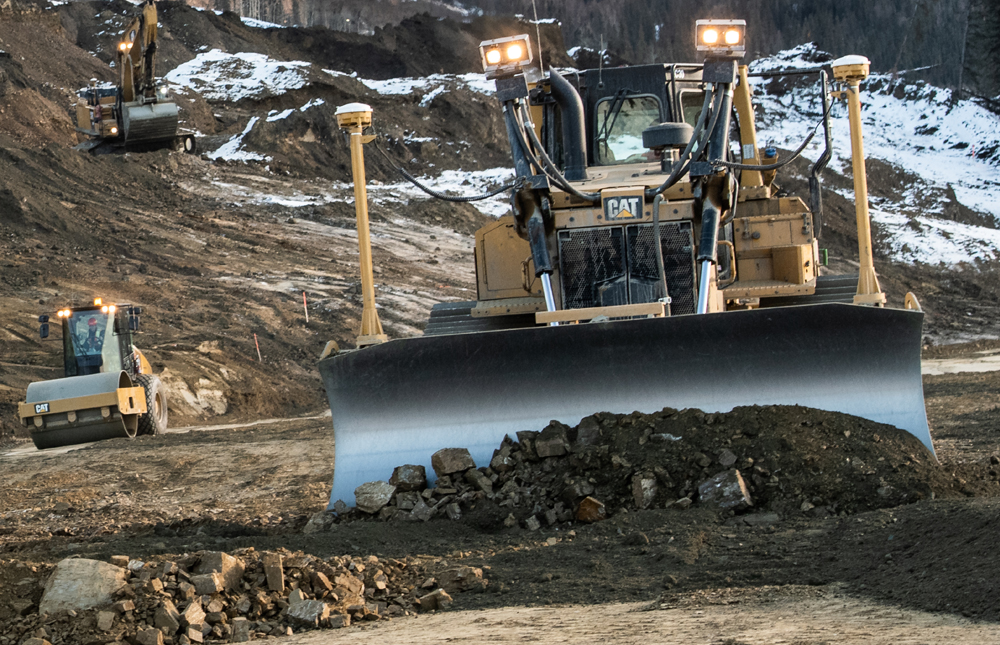
Pelly’s work involved mobilization, clearing, aggregate production, riprap production, water management, road and berm construction, tailings and contaminated soil excavation, culvert installation, geotextile placement, and dust control measures. Additional tasks included spillway excavation, infiltration sump construction, stockpile material hauling, and road crossing sleeve installations. Pelly also conducted QA/QC, materials testing, water sampling, dust monitoring, and project documentation. Equipment used included 745 ADTs, D10 dozers, 349 excavators, a 16M grader, and a McCloskey R230 screening plant.
Pelly provided first aid and emergency services, including a mine rescue team, mobile unit, and ambulance. Prior to startup, Pelly submitted traffic, excavation, risk reduction, dust management, and hot work plans. Specialized procedures were developed for lead/zinc tailings, requiring PPE, decontamination, and dust control. Proactive measures included dust monitoring, road watering, fine aggregate orientation, and snow placement on roadways. Job hazard assessments were conducted, ensuring proper wash stations for equipment and personnel.
Rose Creek Realignment – Faro Mine
Client: Parsons (for CIRNAC)
Year: 2019 – 2022
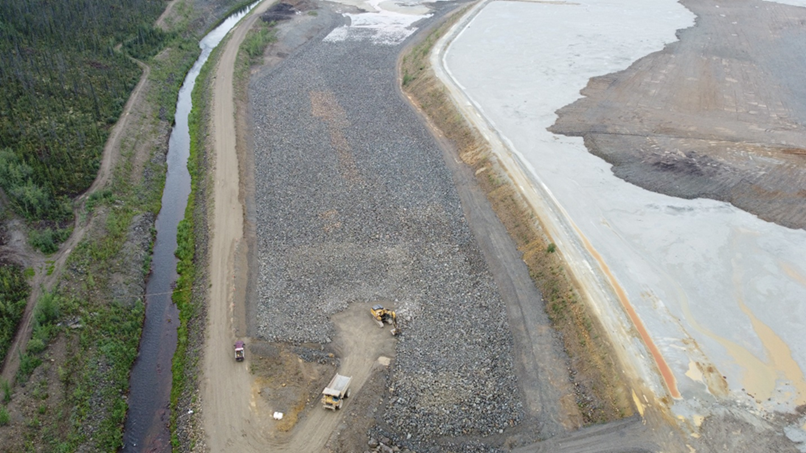
The Faro Mine Site was at one time the largest lead zinc mine in the world. Abandoned in 1997, the mine is considered one of the most difficult and complex mine remediation projects in Canada. The scope of work for this project included the construction of the 1.9 km realignment of the North Fork Rose Creek diversion channel away from mine waste.
The project included the construction of temporary roads, diversion channel, spillway, channel inlet, and the supply/install of BGM liner. A key challenge for this project was the sourcing and producing of the 14 different material types from multiple borrow sources including rock quarry. The project also entailed the preparation of these materials from several borrow areas which included crushing and screening select materials. Pelly was responsible for water and sediment control including construction of temporary tributaries, culvert installation, dewatering and managing sediment impacted and metals impacted water. Pelly performed all materials testing, QA/QC, water sampling and reporting and documentation of the work. Pelly provided first aid and emergency services including mine rescue team, mine rescue training, a fully equipped mine rescue mobile unit and ambulance.
Throughout the project Pelly worked closely with Ross River Dena Council and the Kaska Dena Council ensuring commercial, employment and training opportunities flowed into the communities.
Minto Mine
Client: Minto Explorations Ltd.
Year: 1996 – 2002: Intermittent site development
Year: 2006 – 2018: Continual mining
Pelly worked with Minto Explorations Ltd. in central Yukon for 22 years on this long-term project.
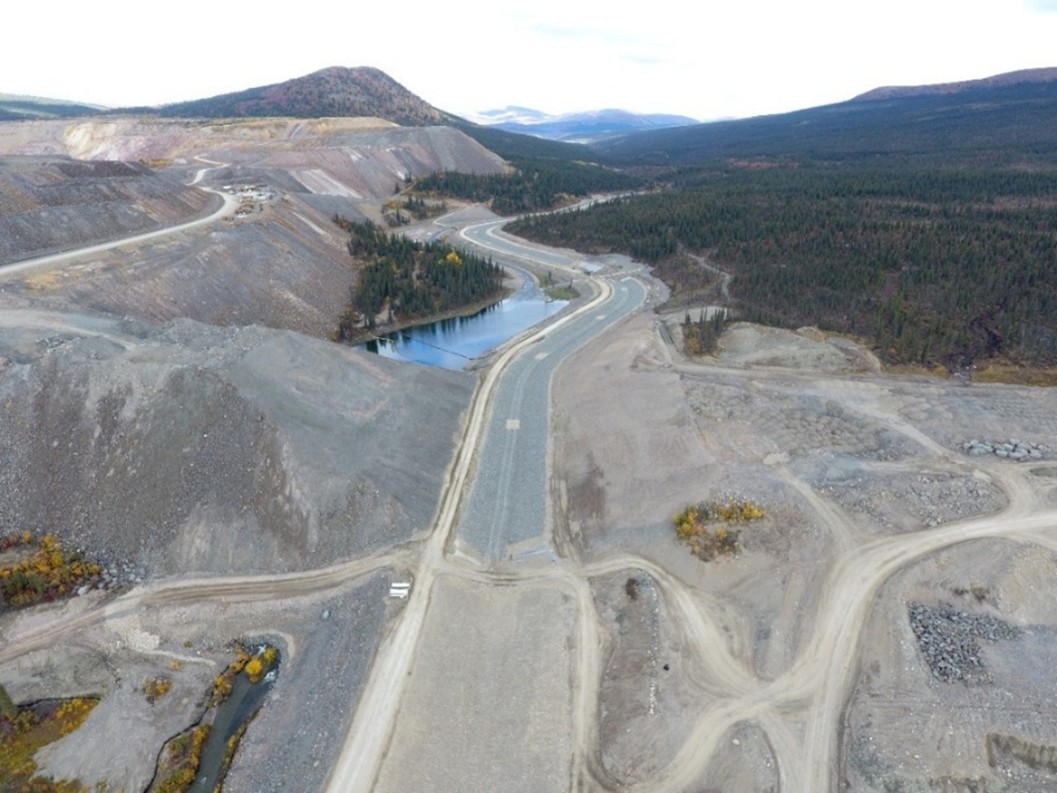
Site development work included construction of a 43-km access road, rerouting of a large watercourse, and flood control measures. Pelly also built a 1,400-metre airstrip and multiple laydown areas. Minto Mine is inaccessible by road for months at a time, during the freeze-up and break-up of the Yukon River, so careful planning and forecasting were essential.
Pelly upgraded the access road and completed the infrastructure development. This included the rough cuts necessary for future camp and mill footprints and the building of a water retention dam in a steep and narrow valley, and an embankment to contain ice-rich overburden.
The site evolved into an operating mine, and Pelly was awarded the contract to mine the main deposit. Pelly drilled, blasted, loaded, hauled and placed large quantities of materials while exercising strict quality control. The average daily target was 12,000 m3 per day, 365 days per year. Ongoing site works entailed construction, maintenance and expansion of all site access roads, dry-stack tailings, stockpile and crusher feed, drainage construction and annual ice bridge construction and maintenance across the Yukon River. A total of four pits were developed and three pushbacks.
Safety was a cornerstone of this project. During the mining phase, there were several years were Pelly did not experience a single reportable incident.
Pelly worked closely with the Selkirk First Nation and the Selkirk Development Corporation for several years during work at the site.
Wolverine, Dillon, Brule Mine
Client: Walter Energy Western Canadian Coal
Year: 2003 – 2012
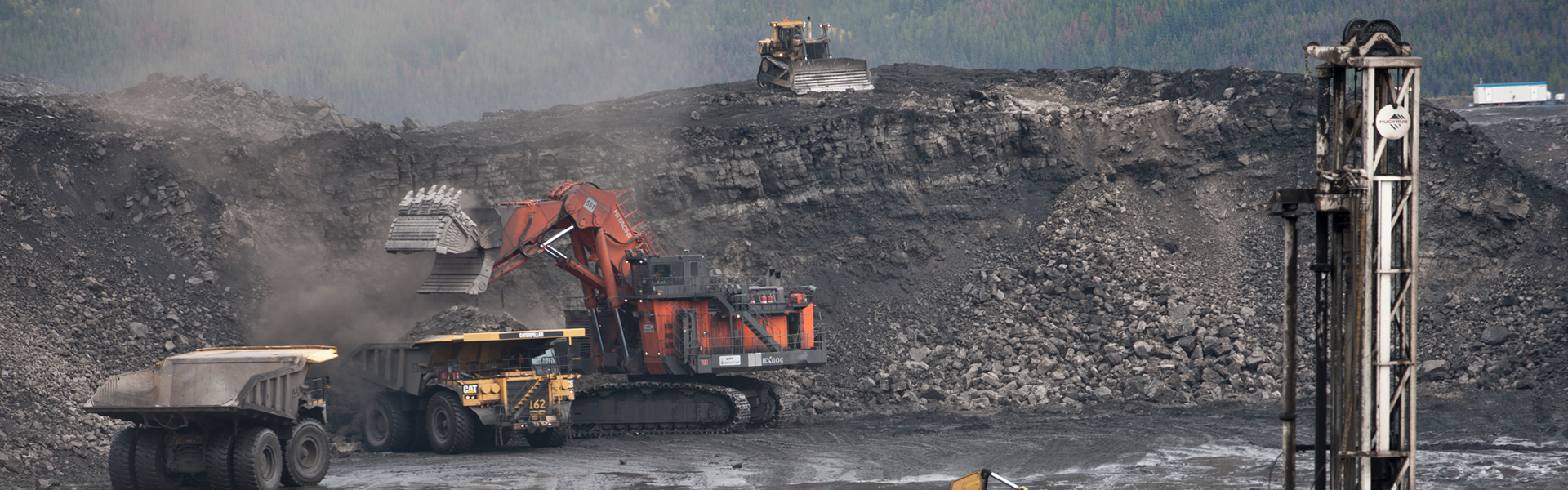
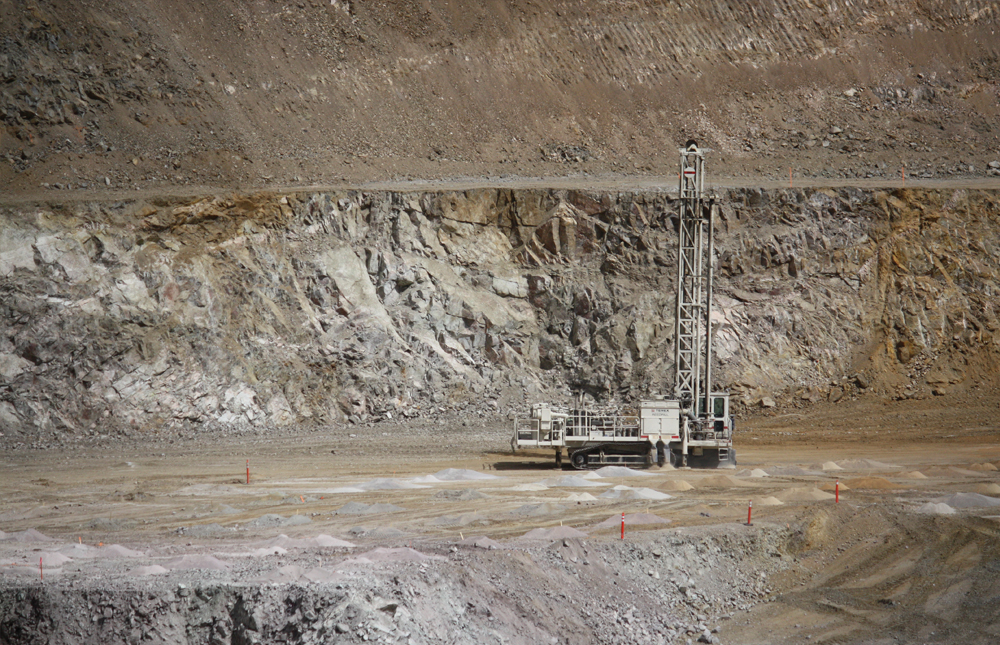
Pelly developed coal properties near Tumbler Ridge and Chetwynd British Columbia for Western Canadian Coal. In 2003 the initial work was as a minor bulk PCI coal sample of the Dillon property which evolved into Pelly leading the start-up and operations for the mine. The fully operational mine was handed over to the client in November 2012. This property was a greenfield site and after the test sample proved successful, Pelly constructed the site infrastructure to support a full-scale mine. Pelly provided more than 250 personnel, 24 hours a day, seven days a week. Pelly performed all work onsite including, drilling and blasting, stripping, ore and waste hauling, short term planning, camp operations, security, access road maintenance, coal crushing, and mine rescue. During the last two years of operation, the average mining quantities averaged 70,000 to 85,000 BCM per day.
During the time of operation Pelly also developed the infrastructure for the Wolverine Mine including roads, wash plant site, sediment ponds, starter dyke, surface drainage systems, and railway extension. Pelly participated in the start-up and operations of this metallurgical coal mine which was handed over to the Client to operate in 2009.
Faro Mine Remediation – Grum Waste Sulphide Cell Remediation Project
Client: Government of Yukon
Year: 2010 – 2011
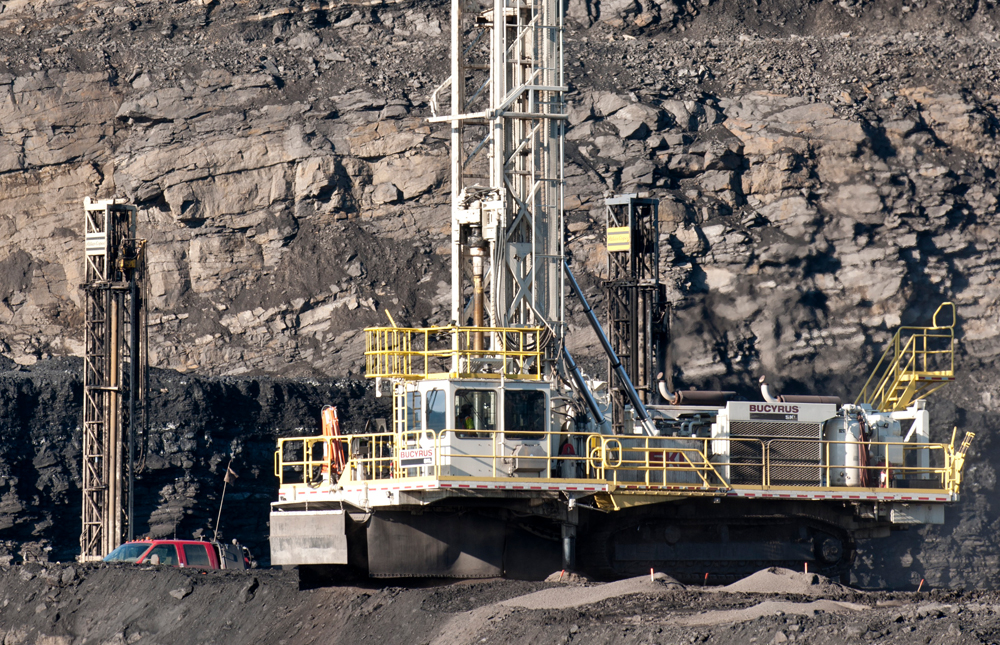
In spring 2010 Pelly was awarded public tender by Government of Yukon to remediate the Grum Waste Sulphide Dump at the Faro Mine Complex near Faro, YT. This project was the first large reclamation project at the Faro Mine site and involved hauling and placing 1.5 million m3 of various materials.
Approximately 30 hectares of the Grum waste rock pile contains highly sulphidic material, and the remediation plan to prevent water contamination involved sloping the entire area and installing an impervious layer of welded HDPE liner over the entire slope. The HDPE membrane was then covered with till overburden materials, then hydro-seeded.
Porcupine Enterprises Ltd.
Year: 2003 – 2017
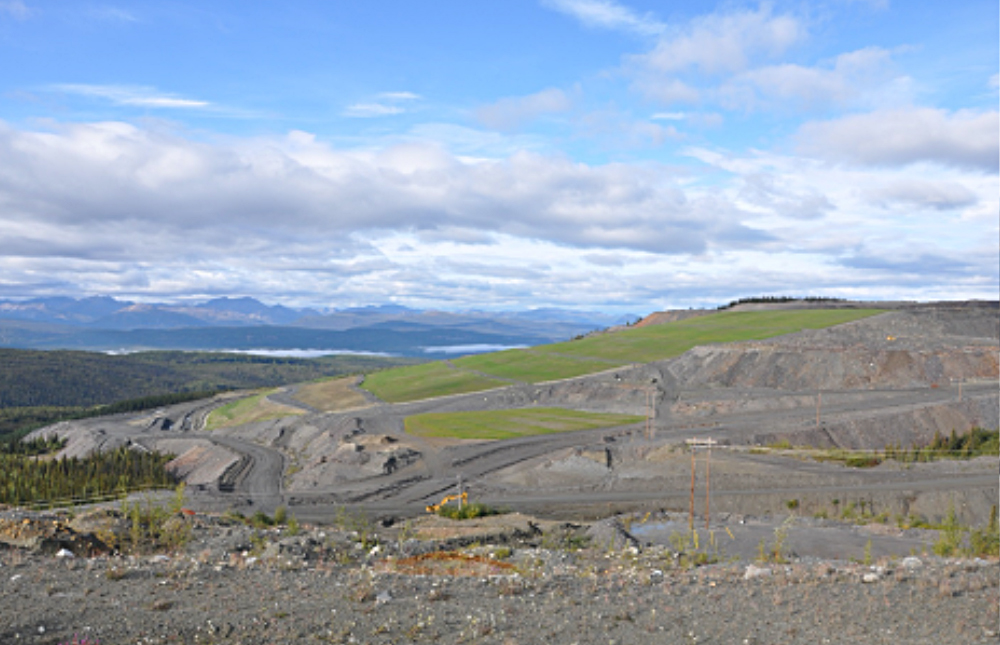
Porcupine Enterprises Ltd. was formed by Pelly Construction Ltd. and Vuntut Development Corporation (VDC), the economic development arm of Vuntut Gwitchin First Nation. Its purpose was to complete earthworks projects in northern Yukon, primarily in Old Crow. After a successful 14-year relationship Pelly Construction sold its share of Porcupine Enterprises to VDC. Porcupine Enterprises Ltd. is now a 100% owned and operated Indigenous business.
Work involved the construction of a 270-km winter road from the Dempster Highway to Old Crow, construction and operation of a rock quarry on Crow Mountain, riverbank stabilization on the Porcupine River, aggregate production, airport runway upgrades, underground utility improvements, road construction and upgrading, and various other community projects.
Golden Bear Mine
Client: North American Metals Corporation
Year: 1997 – 2000
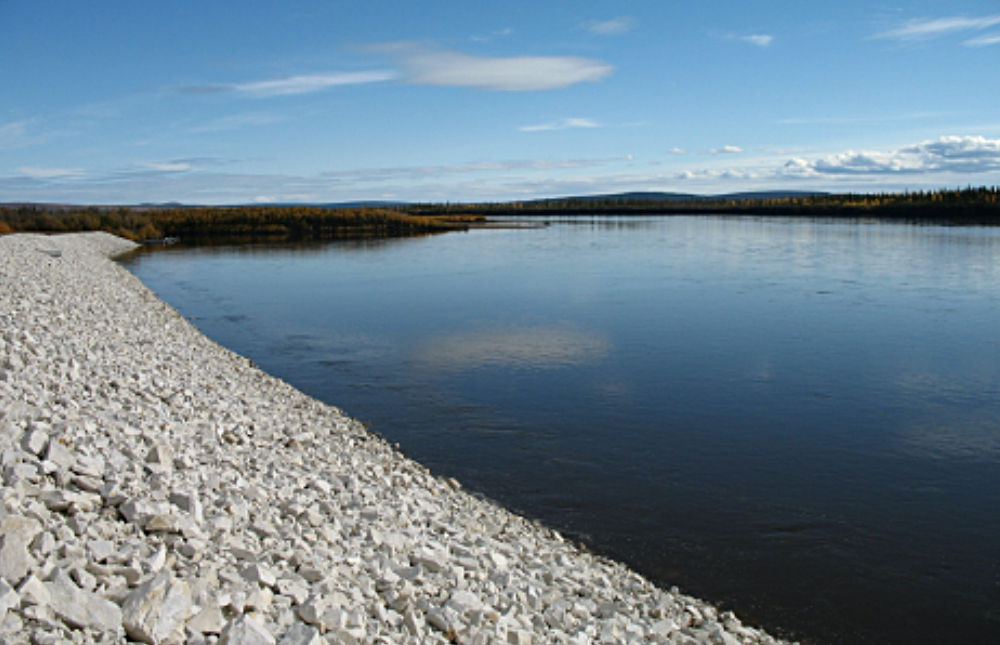
Golden Bear Mine, northwest of Dease Lake, British Columbia, is reached by a 160-km road with restricted access to the Dease Lake‐Telegraph Creek Road. The open pits and heap leach pads are at an elevation of approximately 2,000 metres.
Pelly completed the construction of one heap leach pad and built a second larger pad. The pads were complicated to construct since the terrain was so steep and the season for handling clay is short. Pelly achieved wall control in the deep open-pit through careful analysis of the rock and selective blasting and pre‐shearing.
At one point on this project, crews encountered snow depths of up to 8 metres during the initial spring access. Pelly drilled and blasted 2,600,000 m3 of waste and ore, and excavated and placed 300,000 m3 for use on the heap leach pad and in road construction at the site.
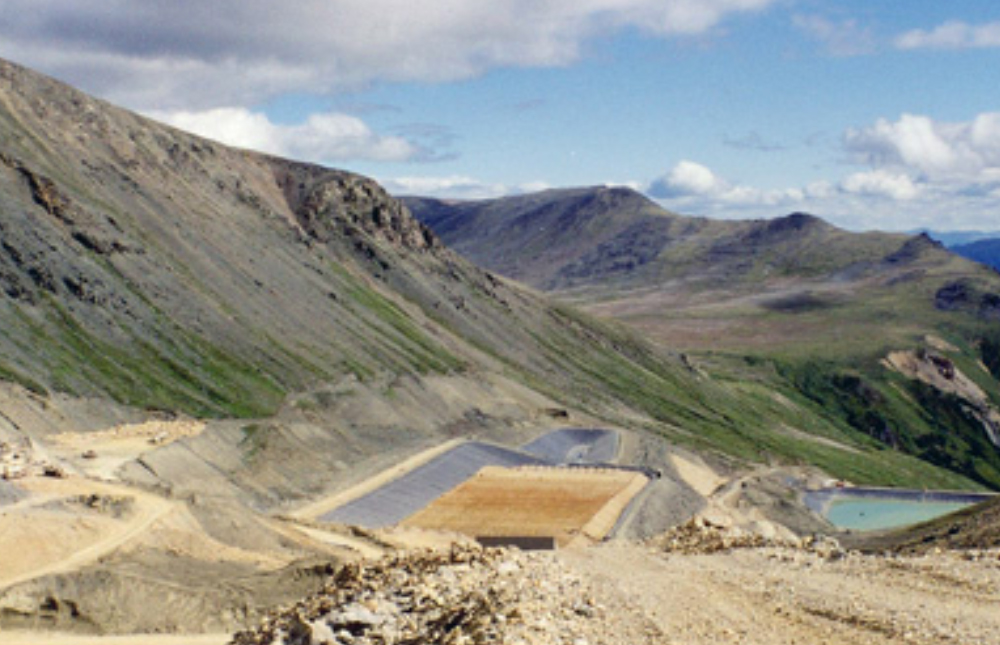
Faro lead-zinc mine, central Yukon
Client: Curragh Resources, Cyprus Anvil
Year: 1990 – 1994
Pelly and our heritage company, General Enterprises Ltd., have been the general contractors on almost all the major projects tendered by the mine’s various owners and caretakers. Significant projects include the relocation of Rose Creek from the valley floor and decommissioning of the freshwater dam. We worked with Ross River Dena Council, Liard First Nation, and Selkirk First Nation on various initiatives at the site.
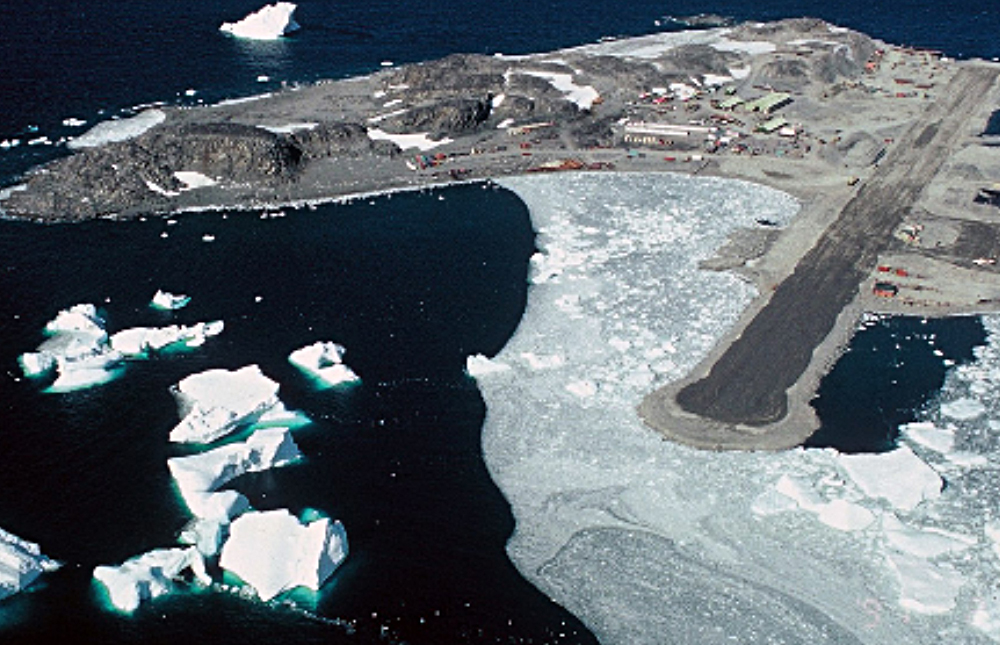
Antarctica
Client: British Antarctic Survey
Year: 1989 – 1991
Pelly worked for the Government of the United Kingdom on a two-season project to build a runway, deep-sea wharf, and other infrastructure on Adelaide Island in Antarctica. Equipment and supplies — including fuel, explosives, parts, materials, portable tug boat and barges and food for two seasons — had to be brought to the site in one ship. The work involved strict operational and environmental requirements.
Click here to see a video about the project
Road Construction
Client: Government of Yukon, Public Works and Government Services,
State of Alaska, Government of Northwest Territories, City of Whitehorse
Year: 1987 – 2003
Over the years, Pelly Construction has worked on hundreds of kilometres of road construction on virtually every road in the Yukon. Most of this work has been on the Alaska Highway, in both the Yukon and British Columbia. We have also completed various roadwork projects in the Northwest Territories and Alaska.
Construction sites in these regions often included high rock volumes, steep and difficult terrain, permafrost, muskeg, quarry development, and large culverts.
Alaska Highway BC and Yukon over 200 km
South Klondike Highway 62 km
Top of the World Highway 70 km
North West Territories Highway #3 27 km
Dempster Highway 80 km
State of Alaska Highways 134 km